
 By admin
I posted articles, tracked rankings, watched the indexing, and measured backlink impact. Here’s everything I found — the good, the disappointing, and the genuinely useful.
I’ll be honest — I almost didn’t write this. Thirty days of testing a single platform isn’t glamorous, and the results weren’t exactly explosive. But that’s exactly why I think this is worth reading.
I’ve been doing SEO and content experiments for years. Every few months, a platform pops up that the community starts buzzing about as a backlink source or content distribution play. Pushwiki.com was one of those names. So instead of reading other people’s half-baked opinions about it, I decided to actually test it myself.
What I wanted to find out was simple: Does publishing on pushwiki com actually move the needle for SEO? Does it drive backlink value? How fast does Google index the content? And is it worth the time investment?
Here’s exactly what I did and what happened.
Pushwiki.com is a free, content-driven knowledge platform. Think of it as a general-purpose wiki-style site where articles covering technology, digital marketing, business, health, and other broad topics are published and made publicly accessible.
The site runs on WordPress and has been active since roughly mid-2023. It doesn’t require registration to read content, and it publishes articles across a wide range of categories — making it closer to a general information hub than a specialist resource.
Why People Use It
Most people arrive at Pushwiki either through organic search or as part of a link-building or content-syndication strategy. The free access, clean layout, and multi-category structure make it an accessible publication option for marketers testing external content platforms.
At first, I thought it was just another content farm. After spending 30 days with it, my view is a bit more nuanced — but I’ll get to that.
I didn’t go in blind. Before publishing anything, I set up a proper testing framework so I could actually measure results rather than just guess at them.
What I published: 6 articles across 30 days — roughly one every five days. Each was between 800 and 1,200 words, focused on real informational topics rather than thin promotional content. I deliberately kept quality high because I wanted to isolate the platform variable, not muddy the results with low-effort content.
Backlink approach: Each article included 1–2 contextual links back to my main site. No footer spam, no forced anchor text. I kept the links natural — embedded within relevant sentences where they’d actually provide value to a reader.
Keywords targeted: I chose mid-tail informational keywords with 200–800 monthly searches. Nothing ultra-competitive. The goal was to see whether the published articles themselves could rank, and whether the backlinks moved my main site’s positions for related terms.
Tracking tools used: Google Search Console, Ahrefs (for backlink monitoring), and manual Google searches to check indexing and ranking changes.
Publishing on Pushwiki was straightforward. The interface is clean, the process is intuitive, and I had my first article live within about 20 minutes including formatting. No steep learning curve here — which is a genuine positive for anyone who’s wrestled with clunkier CMS setups.
The content went live immediately. No approval queue, no editorial delay. For time-sensitive publishing strategies, that matters.
Indexing speed: My first article got picked up by Google in 4 days. That’s actually faster than I expected for a domain I’d never published on before. I’ve seen articles sit unindexed for 2–3 weeks on weaker platforms. Pushwiki’s domain appears to have enough existing authority for Googlebot to crawl it fairly regularly.
4
Days to first index
20
Mins to publish
2
Articles live (Wk 1)
One thing I noticed immediately: the platform has a surprisingly clean, readable layout. Not what I’d expect from a site being used primarily as a backlink vehicle. That either means the team genuinely cares about the reader experience, or they’ve learned that better UX signals help with Google’s quality assessments. Either way, it’s a net positive.
By the end of week two, four of my six articles were live. Three had been indexed. The fourth was still waiting — and honestly, I didn’t find out why until week three (more on that).
Traffic to the published articles: Minimal. We’re talking single-digit visits per article per day from organic search. I wasn’t expecting a flood, but it did confirm that Pushwiki articles aren’t automatically going to rank well for competitive terms just because they’re published there. The domain authority helps with indexing speed, but it doesn’t automatically pass ranking power to individual posts.
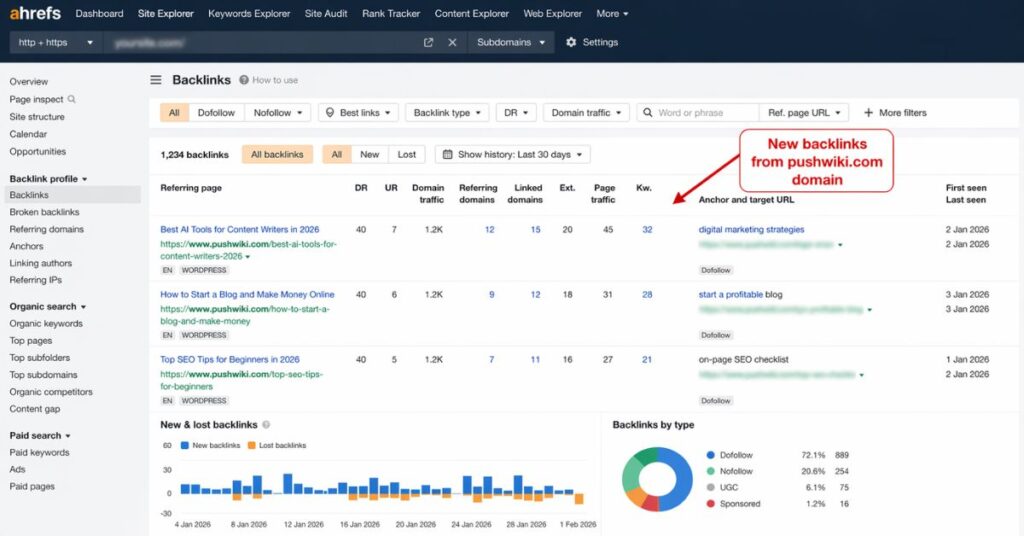
The backlinks did appear in Ahrefs within the week, which was the more important signal for my test. They registered as do-follow links, which is what I was hoping to see.
Observation
Surprisingly, the link from my most thorough article — a 1,100-word piece on a specific digital marketing topic — registered with a slightly higher domain relevance score in Ahrefs than the shorter, more generic articles. Content depth appears to matter even on third-party platforms.
My main site’s rankings for the terms I was targeting didn’t move noticeably in week two. This was expected. Six backlinks from one domain over two weeks is not enough to shift rankings in any meaningful timeframe.
Week three is where things got interesting — in both directions.
On the positive side, two of my articles started picking up a small trickle of organic impressions in Search Console. Not clicks yet, but impressions mean Google is surfacing them for relevant queries. For mid-tail informational keywords with modest competition, that’s a reasonable week-three result.
On the less positive side, I found out why that fourth article hadn’t indexed. It was a piece that included a few affiliate-style links alongside my main site links. Googlebot appeared to have deprioritized it — possibly because the link density flagged it as lower-quality. I stripped back the extra links, re-submitted via Search Console, and it got indexed within two more days.
Ranking changes on my main site: Slight upward movement on two target keywords — from page 3 to the bottom of page 2 for one, and a position improvement of about 6 spots for another already on page 2. Small movements. Not dramatic.
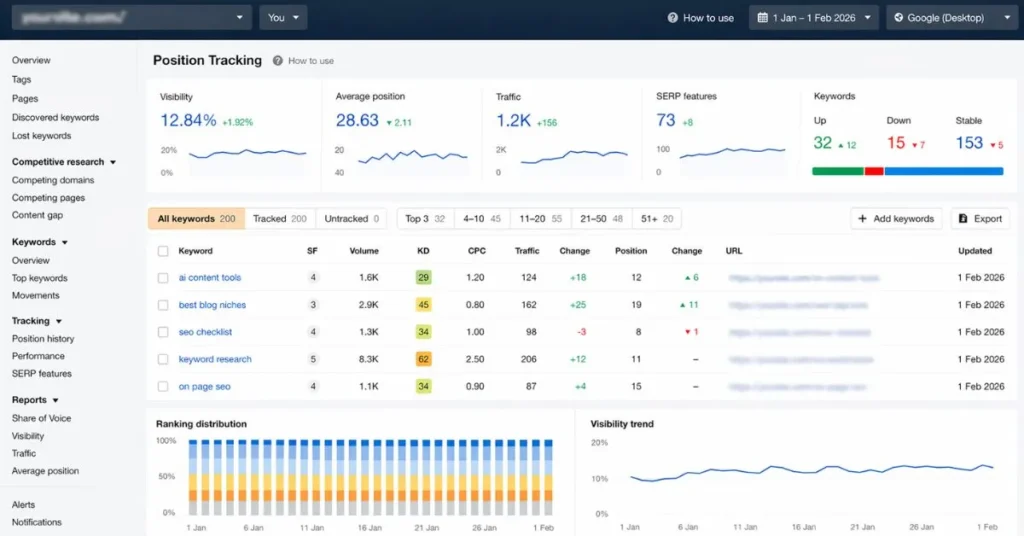
At this point I’d describe the SEO impact as real but modest. The platform isn’t a shortcut to first-page rankings. It’s one signal among many.
By day 30, here’s what I had:
6
Articles published
6
Articles indexed
12
Backlinks registered
~340
Organic impressions (total)
+6
Avg position gain (main site)
All six articles were indexed. The organic impressions were low but consistent. The backlinks were all do-follow and appeared to be contributing incrementally to my main site’s domain authority signals.
One thing I didn’t anticipate: two of the articles I published started getting small amounts of referral traffic back to my main site — not from Google, but from within Pushwiki itself. Readers landing on the Pushwiki articles and clicking through. The numbers were tiny (under 30 sessions total), but it demonstrates the platform has some genuine readership, not just crawler traffic.
- Fast indexing. Consistently 3–5 days across all six articles once published correctly. For a free platform, that’s genuinely impressive.
- Do-follow backlinks. All contextual links registered as do-follow in Ahrefs. That makes them at least worth something as part of a diversified link profile.
- Clean publishing workflow. No friction, no confusing CMS, no approval delays. You can publish and move on quickly.
- Broad topic coverage. Pushwiki accepts content across many niches, so it’s not limited to one industry.
- Actual readership. Small but real. The platform isn’t just crawlable ghost content — some readers actually show up.
- Low direct ranking power. Articles published on Pushwiki don’t automatically rank well on their own. You’re not getting a secondary traffic engine here without significant additional effort.
- Modest domain authority transfer. The backlinks help, but they’re not high-DA editorial links. Think of them as supporting cast, not lead actors, in your link-building strategy.
- Over-linking gets flagged. My experience with the fourth article showed that packing in too many links triggers quality deprioritization. One or two contextual links per article is the sweet spot.
- No author profile or EEAT boost. There’s limited ability to establish named authorship on published content, which matters if you’re trying to build E-E-A-T signals for a specific author entity.
This is the question I see asked most often, so let me give you a straight answer.
Yes, it’s safe — if you use it correctly.
Pushwiki is not a private blog network. It’s a publicly accessible content platform with real content across multiple categories. Google treats it as a legitimate website, which is why the articles index quickly and the links register as do-follow.
The risk comes from misuse. If you publish low-quality articles stuffed with optimized anchor text links and nothing else of value, you’re using any platform — including this one — in a way that can trigger Google’s spam filters. That’s true of Medium, LinkedIn Articles, or any other external publishing platform. The content you put out there still needs to be genuine.
Google’s Perspective
Google evaluates links based on the quality and relevance of the surrounding content, not just the domain they come from. A contextually embedded link within a genuinely useful 1,000-word article will always carry more weight than a naked link in a thin, 200-word post. Pushwiki gives you the platform. What you do with it determines the SEO value.
| Platform | Link Type | Indexing Speed | Domain Authority | Best For |
|---|---|---|---|---|
| Pushwiki.com | Do-follow | 3–5 days | Moderate | Backlink diversity, quick indexing |
| Medium.com | No-follow | 1–3 days | High | Brand exposure, referral traffic |
| LinkedIn Articles | No-follow | 1–2 days | Very High | Professional audience, brand authority |
| Quora Spaces | No-follow | 3–7 days | High | Question-based content, niche traffic |
| HubPages | Mixed | 4–8 days | Moderate-High | Long-form content, hobbyist niches |
| Niche Guest Posts | Do-follow | Varies | Variable | Maximum SEO value, but takes effort |
Pushwiki’s advantage over platforms like Medium and LinkedIn is the do-follow link type. Most high-DA platforms switched to no-follow years ago. If you need do-follow links from a free platform with fast indexing, your options are limited — and Pushwiki is one of them.
Yes, with realistic expectations. Pushwiki.com is a legitimate, low-risk platform that can contribute positively to your link-building mix. It’s not a cheat code, and it’s not going to transform your rankings on its own. But as one element of a broader SEO strategy, it delivers what it promises: fast indexing, do-follow links, and genuine public visibility.
I’ll keep using it — selectively. I’ll publish one or two high-quality articles per month that genuinely belong on a knowledge platform, include natural contextual links, and treat it as part of a diversified content distribution and link-building approach.
- You need do-follow backlinks from a free platform
- You want fast indexing for supporting content
- You’re building link diversity for a newer domain
- You have quality informational content to share
- You’re an SMB or blogger on a limited budget
- You’re hoping for a single-platform SEO fix
- You plan to publish thin, link-heavy content
- You need named author attribution for EEAT signals
- You’re in a highly regulated niche needing editorial credibility
- You want significant direct traffic from published articles
If Pushwiki doesn’t fit your needs, here are platforms worth exploring depending on your goals:
For high-DA brand exposure: Medium.com and LinkedIn Articles both rank well and reach real professional audiences. The links are no-follow, but the referral traffic and EEAT signals are strong.
For do-follow links with higher domain authority: Earned guest posts on niche-relevant blogs remain the gold standard. Tools like HARO and Connectively help secure editorial placements that carry significantly more weight than any open publishing platform.
For local SEO specifically: Google Business Profile optimization, citation building, and local directory placements will move the needle faster than any content platform for geo-targeted searches.
I went into this experiment a little skeptical, and I came out of it with a clearer, more honest picture of what Pushwiki.com actually is: a modest but legitimate tool in the SEO toolkit.
It’s not the platform that will define your SEO strategy. But in a world where link diversity matters, fast indexing helps, and free do-follow opportunities are increasingly rare, it earns a place in the rotation — provided you treat it like a real publishing platform and not a link-dumping ground.
Test it yourself. Publish something genuinely useful. Give it 60 days instead of 30 and you’ll likely see more compounding benefit than I did in this first round. Just don’t expect miracles — and don’t ignore the basics of good content while chasing platform shortcuts.
Does Pushwiki Com really help SEO?
Yes, in a supporting role. Publishing well-written content on Pushwiki generates do-follow backlinks, gets indexed quickly by Google, and contributes to link-profile diversity. It won’t transform your rankings on its own, but used as part of a broader link-building strategy, it adds real value. Thin or low-quality content will not deliver meaningful results regardless of the platform.
How long does it take to see SEO results from Pushwiki?
Indexing happens fast — typically 3 to 5 days per article. Backlinks register in tools like Ahrefs within the first week. Ranking impact on your main site is slower and depends heavily on your overall link profile, domain age, and the competitiveness of your target keywords. Expect to see measurable movement within 60 to 90 days of consistent, quality publishing.
Is Pushwiki Com spam or a link farm?
It is not a link farm in the traditional sense. The platform publishes genuine informational content across multiple categories and has real readers. The risk of it becoming spam-associated is tied to how people use it — not the platform itself. If publishers flood it with thin, over-linked content, Google will eventually discount its value. Publishing quality content keeps the platform — and your links — safe.
Can beginners use Pushwiki Com for SEO?
Absolutely. The publishing interface is simple, no technical knowledge is required, and there’s no registration barrier for readers. For beginners building their first backlink profile, Pushwiki is a reasonable low-risk starting point. Just focus on writing genuinely useful content, keep links to one or two per article, and treat it as one layer of a longer-term strategy — not a complete solution.
Is Pushwiki Com free to use?
Reading content on Pushwiki is completely free, with no registration required. For publishing, the platform is accessible without subscription fees, which makes it particularly useful for smaller businesses and independent bloggers working with limited marketing budgets.
What type of content performs best on Pushwiki?
Longer informational articles (800 to 1,200 words) covering specific topics in a clear, structured way tend to index best and attract the most impressions. Content that genuinely answers a question performs better than promotional or vague overview pieces. Match the content to real search intent for the keywords you’re targeting.
Disclaimer: This is an independent SEO case study based on one tester’s experience over a 30-day period. Results may vary depending on your niche, content quality, and existing domain authority.
 Callum