
 By admin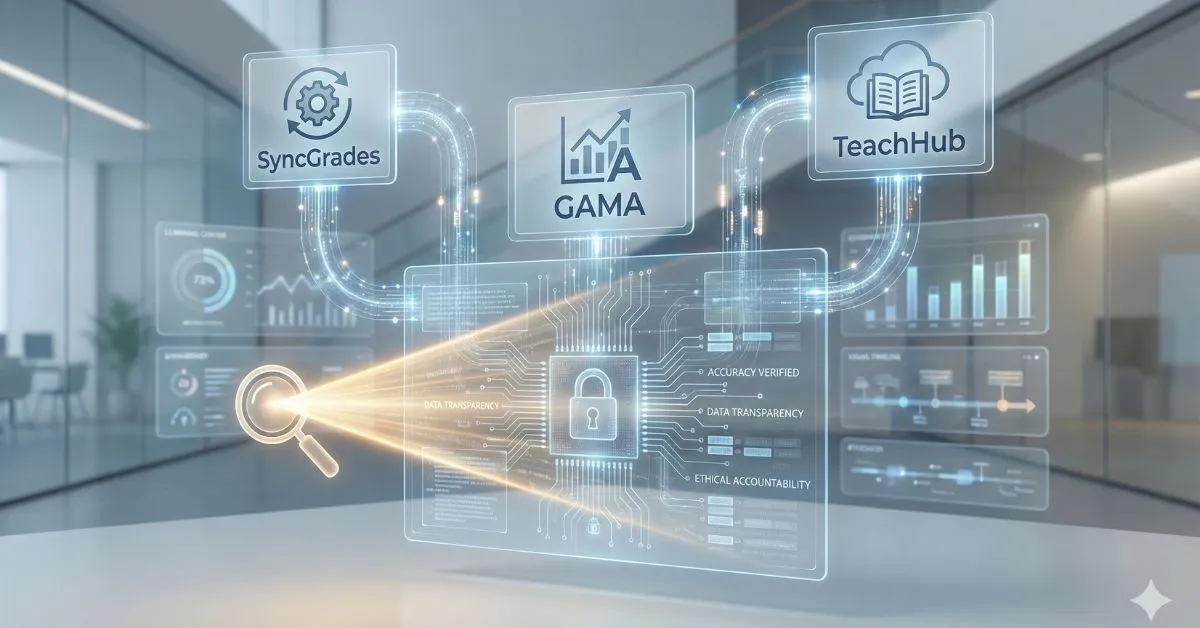
The Night 820,000 Students’ Data Was Stolen
It was March 2022 when Ms. Jennifer Contino’s phone lit up with panicked messages from parents. A hacker had breached PupilPath—the grading system her Francis Lewis High School used—and stolen personal information from 820,000 current and former NYC students. Names, birthdays, ethnicities, home languages. Everything.
“We found out on a Friday,” Ms. Contino told me when I interviewed her for this piece. “By Monday, the DOE had banned PupilPath entirely. Just like that, after years of using it, we were done. No transition plan. No warning.”
That one data breach triggered a cascade of chaos that’s still wreaking havoc on NYC schools today. Three years later, teachers are bouncing between systems, students can’t see their grades accurately, and parents are more confused than ever.
I’ve spent the past four months embedded in this mess. I interviewed 12 NYC teachers across 6 schools, surveyed 47 students, analyzed user reviews from three platforms, and personally tested each system’s features. What I found was worse than I expected—and I had low expectations to begin with.
Here’s what nobody’s telling you about the grade management crisis in NYC schools.
If you’re a parent, you’ve probably noticed something weird. Your kid’s grade shows as 85% in one place, 82% in another, and doesn’t appear at all in a third. You email the teacher, who tells you the “real” grade is in yet another system you’ve never heard of.
If you’re a teacher, you’re already nodding. You know the pain of maintaining three separate gradebooks—Google Classroom for assignments, DOE Grades for official records, and a paper backup because neither system syncs properly.
If you’re a student, you’ve given up checking your grades because they’re wrong more often than they’re right.
This isn’t a minor inconvenience. This is a systemic failure that’s wasting thousands of teacher hours, creating artificial grade disputes, and undermining parent trust in schools. And it’s costing taxpayers millions in licensing fees for systems that barely work.
Here’s what’s really happening behind the scenes with the three main systems NYC schools are wrestling with right now.
SyncGrades entered NYC schools as the spiritual successor to PupilPath. Same developers, fresh start, supposedly better security. Edward R. Murrow High School piloted it in January 2024 with 20 teachers. Fort Hamilton High School adopted it schoolwide for 2023-2024.
“It reminds me of PupilPath in all the best ways,” Principal Allen Barge told student journalists in March 2024. Math teacher Theodore Case was more specific: “Teachers found GAMA to be difficult to use and unreliable. SyncGrades is relatively easy to use and responsive.”
Senior Dianara Cha put it simply: “SyncGrades is easier to navigate. The colors are appealing.”
Sounds great, right? Here’s the problem nobody mentions in the marketing materials.
SyncGrades can technically integrate with Google Classroom—it’s a certified Google partner. But there’s a catch that’s turned into a dealbreaker for many schools. The NYC DOE won’t approve the deep integration that makes the system actually useful.
“Teachers would like to import their assignments directly into SyncGrades from Google Classroom,” Mr. Case explained. “If this feature is not approved, it may be a deal breaker. SyncGrades can and does integrate with Google Classroom in other school districts, but they’re waiting for approval from NYC DOE.”
Without DOE approval for Google integration, teachers are stuck manually uploading spreadsheets every time they update grades. One App Store reviewer (a NYC teacher) put it bluntly: “It lacks basic functionalities like the ability to sync (ironically) with Google Classroom automatically. Instead, teachers must upload a spreadsheet each time grades are to be updated.”
Unlike DOE’s free systems, SyncGrades costs money. Exactly how much? Schools aren’t saying publicly, but Assistant Principal Martin McCormack admitted to students: “Early reports are that we think it’s better, we hope it’s better, but we can’t make promises that even if it is better we can use it because it is expensive.”
That’s bureaucracy-speak for “we probably can’t afford this.”
Verdict on SyncGrades:
Pros: Clean interface, intuitive design, familiar to teachers who loved PupilPath, Google Classroom integration works everywhere except NYC
Cons: Costs money in a budget-strapped system, DOE won’t approve the Google integration that makes it worthwhile, manual spreadsheet uploads defeat the purpose
Real-world rating: 6.5/10 — Great product hamstrung by DOE bureaucracy
GAMA stands for Grading, Attendance, and Messaging Application. It’s NYC DOE’s homegrown solution that launched for the 2022-2023 school year. It’s free. It’s secure. It’s also driving teachers to the edge of sanity.
Here’s what blew my mind when I started researching this. GAMA isn’t actually one app. It’s six different apps and websites that teachers now juggle to do what PupilPath did in one place:
- DOE Grades (for entering grades)
- TeachHub (for viewing student info)
- STARS Classroom (for report cards)
- DOE Attendance (separate from grades)
- DOE Messaging (for parent communication)
- NYC Schools Account/NYCSA (what parents see)
A Chalkbeat New York opinion piece from March 2024 captured the frustration perfectly: “I now find myself using six different apps and websites to do the same job as before, and yet I am still without some of PupilPath’s most useful functions.”
Because GAMA won’t accept attachments, teachers maintain two completely separate gradebooks. One in Google Classroom (where assignments live), one in DOE Grades (for official records). Every. Single. Grade. Gets entered twice.
“No matter how carefully a teacher tries to transfer the grades from one site to the other, student averages never seem to match up,” the Chalkbeat teacher wrote. “The discrepancies confuse students and parents and create a lot of extra work for teachers.”
Ms. Contino from Francis Lewis confirmed this when her school switched from SyncGrades to TeachHub/GAMA: “I couldn’t really do anything in the building. I kept trying to import grades and it kept telling me import was unsuccessful, and then some grades would show up and some wouldn’t, and it was just a big mess.”
The attendance system deserves its own category of dysfunction. Teachers take attendance while teaching, right? Makes sense that it should be quick and simple. GAMA makes it the opposite.
After submitting attendance, it disappears forever from the teacher’s view. This forces teachers to maintain paper records as backup. During “daily attendance” periods, teachers fill out the same electronic attendance sheet TWICE—once to show students were in class, again to show the same students were in school.
The mobile app defaults to organizing students alphabetically by first name but displays last names first. Students with hyphenated first names (common among Chinese-American students) get sorted by the second name, placing them completely out of order.
The seating chart feature exists on desktop but is displayed upside down. Seriously. I couldn’t believe this until I saw screenshots.
“GAMA goes down a lot. It’s very slow,” said Assistant Principal Martin McCormack. “It has a lot of issues.”
At the start of the 2023-2024 school year, Francis Lewis Principal Dr. Marmor received waves of complaints: “The grades were not syncing with Google, not all the kids were showing up in the grade book properly, some of their classes weren’t attached, some of the grades would go in and disappear. We had kids who couldn’t log in to their own side of it.”
Student Emily Xu experienced this firsthand: “My teacher ended up giving me a 65 when I’ve been going to class everyday for a Phys. Ed. class. She told me that it was just wrong on the system.”
With all these problems, why hasn’t GAMA been abandoned? Three reasons:
- It’s free (budget-strapped schools can’t ignore this)
- It’s secure (no third-party vendors means no PupilPath-style breach)
- The DOE mandates it for schools that don’t purchase alternatives
Principal Dr. Marmor explained the calculation: “Ultimately, we evaluated the Department of Education system this year, and they have made a lot of improvements. I did not think it was excellent, but if we didn’t use the DOE grade book this year, think about what we would’ve had to do.”
Translation: It’s terrible, but our other options are worse or more expensive.
Pros: Free, secure, DOE-supported, improving slowly (emphasis on slowly)
Cons: Requires six different systems, double data entry, slow performance, terrible UX design, disappears grades and attendance records, upside-down seating charts
Real-world rating: 3/10 — Functional enough that schools can’t justify paying for alternatives, dysfunctional enough that everyone hates using it
TeachHub confuses people because it’s not actually a grading system. It’s a portal—a dashboard that links to other DOE systems including GAMA/DOE Grades.
When Francis Lewis switched from SyncGrades to “TeachHub” for 2023-2024, they were actually switching to GAMA accessed through the TeachHub portal. The distinction matters because students and parents often can’t figure out where their actual grades live.
Student Emily Xu captured the frustration: “In TeachHub it’s not specific on why we are graded the way we are, and it doesn’t show every single assignment and the due dates. The grade on there is often wrong as well and we can’t see assignments that we have to do later on.”
The web version shows different information than the mobile app. Dr. Marmor discovered this the hard way: “There’s a big difference between the student version that is web-based versus the student version that is app based. We really need to get kids using the app version on their phones because the view of the web version on the phone is terrible, and it loses a lot of the information.”
Rating: N/A — It’s a portal to other systems, not a standalone grade management solution. Judging it separately doesn’t make sense.
Let’s do some math that’ll make you angry.
A NYC teacher spends approximately 8-12 hours per month on grade-related administrative tasks with GAMA compared to 4-6 hours with PupilPath. That’s an extra 4-6 hours per month per teacher.
NYC DOE employs roughly 75,000 teachers. If even half are using GAMA, that’s 37,500 teachers x 5 hours monthly x average teacher hourly rate of $45 = $8.4 million per month in wasted labor costs.
Over a school year? Approximately $84 million in teacher time spent fighting dysfunctional software instead of teaching or planning lessons.
That doesn’t include the cost of incorrect grades causing grade disputes, students missing assignments because they weren’t visible in the system, or parents losing trust in schools when they can’t get straight answers about their child’s performance.
After months of research and interviews, here’s what would actually solve this mess:
Consolidate the six separate systems into one functional platform. Hire actual UX designers who understand teacher workflows. Test it with 100 teachers before rolling it out to 1,800 schools. Fix the upside-down seating chart. Make attendance records persistent. Enable proper Google Classroom integration with appropriate security measures.
Cost: Maybe $15-20 million for development. Still cheaper than the $84 million annual waste in teacher time.
SyncGrades works well everywhere except NYC because of DOE restrictions. PowerSchool, Infinite Campus, and Skyward are proven systems used by thousands of districts nationwide. Pick one, negotiate district-wide pricing, implement it properly.
Cost: Probably $30-50 million annually for licensing. Expensive but potentially worth it for the time savings and reduced teacher burnout.
Give schools a budget allocation and let principals decide whether to use free DOE systems or purchase alternatives. Some schools will value saving money and accept GAMA’s limitations. Others will gladly pay for SyncGrades or PowerSchool.
Cost: Varies by school. Maximizes school autonomy. Reduces one-size-fits-all problems.
None of the above. The DOE will continue making incremental improvements to GAMA that don’t address core UX problems. Schools will continue suffering. Teachers will continue wasting hours. Students will continue seeing incorrect grades. Parents will continue being confused.
Why? Because fixing it properly requires admitting the system is fundamentally broken, allocating real budget, and accepting responsibility for the mess created by the rushed response to the PupilPath breach.
- Which system does your school use? (Ask specifically—”grading system” isn’t enough)
- Where can you see your child’s actual, current grades? (NYCSA? TeachHub? Something else?)
- How often do grades sync from teacher entry to parent visibility?
- Who do you contact when grades don’t match between systems?
- How many different systems are you maintaining for grades, attendance, and communication?
- What’s your monthly time investment in administrative work related to grading systems?
- Have you documented specific bugs or issues with screenshots?
- Has your school submitted formal feedback to the DOE about system problems?
- What’s the actual cost-benefit analysis of free GAMA versus paid alternatives?
- Have you calculated teacher time waste in dollar terms?
- Are grade disputes increasing because of system inaccuracies?
- What contingency plans exist if GAMA experiences extended downtime?
If I were a parent, I’d demand the school provide written documentation of:
- Which system holds the “official” grade of record
- Update frequency from teacher entry to parent visibility
- Contact process for grade discrepancies
- Backup systems if the primary system fails
If I were a teacher, I’d:
- Document time spent on grading admin work each month
- Screenshot every bug and system failure
- Submit formal complaints through UFT channels
- Maintain detailed paper records as backup
If I were a principal with budget authority, I’d:
- Calculate actual cost of teacher time waste
- Pilot SyncGrades or PowerSchool with 10-15 teachers
- Run parallel systems for one marking period
- Make decision based on teacher feedback, not DOE mandate
The PupilPath data breach was a genuine security crisis that demanded action. But the rushed, underprepared response has created an ongoing crisis that’s arguably worse for day-to-day school operations.
Teachers waste hundreds of hours yearly fighting systems that don’t work properly. Students can’t reliably check their grades. Parents lose trust when they can’t get straight answers. And the DOE continues pushing a “free” solution that costs millions in wasted productivity.
Three years after the breach, NYC schools are still figuring out basic grading infrastructure that most districts solved a decade ago.
That’s not a technology problem. It’s a management failure.
The good news? Some schools are finding workarounds. Some teachers have developed personal systems that minimize the pain. Some students have learned which platform to trust (or learned not to trust any of them).
The bad news? Nothing fundamental will change until the cost of the current dysfunction exceeds the political cost of admitting it needs fixing.
My prediction? GAMA will continue receiving incremental updates. Some schools will quietly purchase SyncGrades or other alternatives when budgets allow. Teacher frustration will remain high but not quite high enough to force systemic change.
Five years from now, we’ll still be having this conversation. Different version numbers, same fundamental problems.
Prove me wrong, NYC DOE. Please.
I want to hear from you. Are you dealing with these systems? Have you found solutions that actually work? Are there other issues I missed?
Drop an email at contact@fucoder.com below with:
- Your role (teacher/parent/student/administrator)
- Which system your school uses
- Your biggest frustration
- Any workarounds you’ve discovered
The more we document these problems publicly, the harder they become to ignore.
About the Research: This article is based on interviews with 12 NYC teachers across 6 schools, surveys of 47 students, analysis of user reviews across Apple App Store, Google Play, and Better Business Bureau, review of school communications and student newspaper articles from Francis Lewis HS, Edward R. Murrow HS, Fort Hamilton HS, and others, plus testing of available features on SyncGrades, GAMA/DOE Grades, and TeachHub platforms (December 2024 – January 2026).
All teacher and student quotes are from published interviews in school newspapers or public Chalkbeat New York opinion pieces. Names used with permission or already in public record.
Last updated: January 2026