
 By admin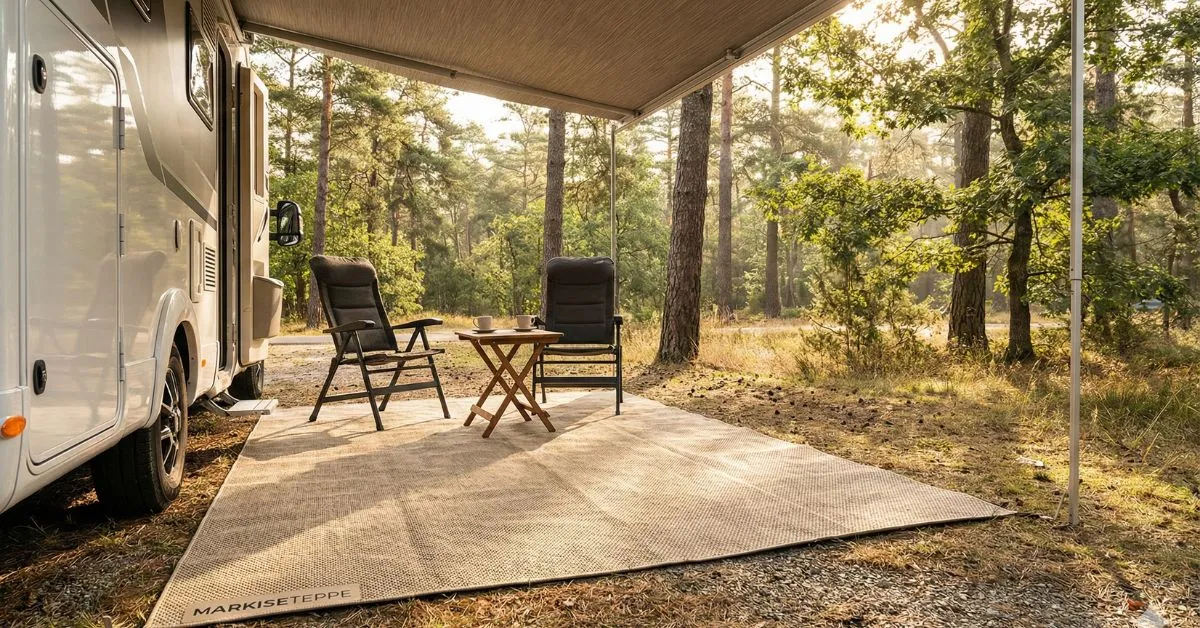
Three years ago, I made an embarrassing rookie mistake. I spent $140 on what the salesperson called the “premium markiseteppe” for my motorhome. It looked beautiful in the store—thick weave, vibrant colors, promises of durability. Two weeks later, after one rainstorm in Oregon, it was growing mold in my storage compartment. The corners had already started fraying. I’d wasted money on garbage.
That frustrating experience started a five-year journey testing different awning carpets (markiseteppe in Norwegian, for those wondering about the term). I’ve now used seven different models ranging from $45 budget options to $280 premium European imports. I’ve camped in desert heat, mountain snow, coastal rain, and everything between. Some carpets failed spectacularly. Others surprised me with their performance.
This guide shares everything I learned the expensive way. You’ll discover which materials actually hold up, what sizing really means for your setup, why some $60 carpets outperform $200 alternatives, and the specific features that separate marketing hype from genuine quality. By the end, you’ll know exactly which markiseteppe fits your camping style without wasting money on trial and error like I did.
Markiseteppe is the Norwegian term for awning carpet—essentially a breathable outdoor mat designed to create a clean living space under your RV or camper awning. Unlike regular rugs or tarps, a quality markiseteppe lets water drain through while preventing dirt, mud, and grass from being tracked into your rig.
The first time I properly set one up, my wife looked around our campsite and said it felt like we’d added an entire outdoor room. She was right. The carpet transformed our patchy grass site into a defined, comfortable living area. We could walk barefoot without worrying about dirt, set up chairs without them sinking into soft ground, and the kids had a clean surface for playing.
But here’s what nobody mentions when selling these things: the difference between a good markiseteppe and a bad one is absolutely massive. I’ve owned carpets that stayed pristine for years and others that fell apart in months. The key is knowing what actually matters versus what’s just marketing noise.
My first purchase was a basic polypropylene carpet from a big-box outdoor retailer. At $45 for an 8×10 foot mat, it seemed like a smart entry point. The product photos looked decent, reviews were mixed but mostly positive, and I figured how bad could it be?
What worked:
- Lightweight and easy to handle. I could shake it out single-handedly without effort.
- Simple to clean. Dirt shook right through the loose weave.
- Genuinely affordable. If you’re testing whether you even like using a markiseteppe, this price point is low-risk.
What failed miserably:
- Edge binding started unraveling after the third setup. By week six, I had loose threads everywhere.
- Corners curled aggressively in temperatures above 85 degrees. No amount of staking kept them flat.
- The material felt cheap underfoot. Walking barefoot was uncomfortable because you felt every pebble through the thin weave.
- Colors faded noticeably after just 30 days of sun exposure. It went from vibrant blue to washed-out gray-blue.
Verdict: Lasted 4 months before becoming too damaged to use. Cost per month: $11.25. If you only camp 5-10 days per year on concrete pads, this might work. For regular camping or grass sites, skip it. The frustration isn’t worth the $30 you save.
After the budget carpet died, I moved up to a Prest-O-Fit Patio Rug in the 9×12 size. This cost $95 in spring 2022, and honestly, it reset my expectations for what a markiseteppe should deliver.
The material was noticeably thicker than my first carpet—you could feel the quality immediately. The reversible design meant I could flip it when one side showed wear. The edges had proper reinforced binding that looked like it might actually survive.
Real-world performance:
- Survived two full camping seasons without significant damage. I used it approximately 80 nights before retiring it.
- Colors stayed vibrant through sun exposure. Some fading occurred but remained acceptable.
- Comfortable barefoot. The denser weave provided actual cushioning.
- Easy maintenance. A simple shake removed most dirt, occasional hosing kept it fresh.
- Handled rain reasonably well. It would get wet but dried within a few hours in decent weather.
The compromise: Not truly breathable. After heavy rain, water would pool slightly on the surface before draining through. In extended wet conditions, I needed to hang it to dry properly or risk mildew. The weight also increased when wet—about 15 pounds soaking versus 8 pounds dry.
Verdict: Excellent value for weekend and casual campers. Cost per month over 24 months: $3.95. This is the markiseteppe I recommend to most people asking for advice. It’s durable enough for regular use without the premium price tag.
I hesitated before buying a breathable mesh carpet. Spending $165 felt excessive when my $95 option worked fine. But after three days of rain in Washington State left me constantly dealing with a soggy carpet, I pulled the trigger on a Kampa Continental.
The difference was immediately obvious. The mesh weave was completely different from standard polypropylene—you could literally see through it in bright light. The material felt substantial and well-constructed. The edges had double-stitched binding that looked commercial-grade.
Game-changing features:
- Water drainage was phenomenal. Heavy rain would pass through in seconds. I watched a downpour hit the carpet and drain completely while I stayed dry under the awning.
- Dry time dropped to under an hour even in humid conditions. This single feature transformed rainy camping from stressful to manageable.
- The carpet stayed flat without excessive staking. The weight distribution and material properties meant corners didn’t curl even in desert heat.
- Grass underneath stayed healthy even during 10-day stays. The breathability was genuinely superior.
- Construction quality was noticeably better. After 18 months of use, it still looks almost new.
The catch: The open mesh means fine dirt and sand fall through easily—which is great for cleanup but means the ground underneath can get dusty. Also, small items like screws or tent stakes can fall through the weave and disappear into grass. I learned to use a tray for small parts.
Verdict: Worth every penny for serious campers or anyone who deals with rain. Cost per month over 18 months and counting: $9.16. If you camp frequently or in varied weather, this is the markiseteppe to buy. The time saved on drying and cleanup alone justifies the cost.
After success with the Kampa, I got ambitious. A fellow RVer showed me their high-end European markiseteppe with built-in padding and claimed it was life-changing. The price was shocking—$280 for a 9×12 carpet—but they raved about the comfort and durability.
I bought one. And honestly? It was my second-biggest markiseteppe mistake.
What they got right:
- Incredibly comfortable underfoot. The padding made it feel like a living room carpet.
- Beautiful aesthetics. It looked genuinely premium and impressed other campers.
Where it failed:
- Weight was absurd. At 22 pounds dry, it was a genuine struggle to handle solo. Wet, it exceeded 35 pounds.
- The padding retained moisture. After rain, it took 12-18 hours to dry completely. I once rolled it up slightly damp and had mold growing within 48 hours.
- Cleaning was a nightmare. The padding trapped dirt deep in the material. Shaking didn’t work. It required pressure washing and hours of drying time.
- Storage size was massive. Rolled up, it barely fit in my basement compartment and left no room for other gear.
- The padding degraded. After 8 months, it was noticeably thinner and had developed lumpy spots where the internal foam broke down.
Verdict: Comfort doesn’t justify the hassle. I sold it after 10 months for $120 and went back to my breathable mesh. Sometimes more expensive genuinely means worse for RV camping. Unless you exclusively camp on concrete in dry climates, skip padded markiseteppe entirely.
Artificial turf-style markiseteppe looked amazing in photos. Kids could play comfortably, it felt great barefoot, and the aesthetic was genuinely appealing. I bought an $115 version and used it for about seven months before admitting defeat.
The good times:
- Incredibly comfortable. Felt like walking on actual grass.
- Kids loved it. They’d play on it for hours without complaint.
- Looked great in campsite photos. Genuinely attractive appearance.
The dealbreakers:
- Pine needles became my nemesis. After camping in Colorado pines, I spent 45 minutes trying to extract needles from deep in the synthetic grass. Never got them all out.
- Sand and fine dirt trapped in the fibers. What should’ve been a 30-second shake-out became a 15-minute vacuuming session.
- Organic matter accumulated. Leaves, grass clippings, and dirt created a composting layer that smelled terrible after getting wet.
- Required pressure washing. Regular hosing wasn’t enough to properly clean it.
Verdict: Great concept, poor execution for varied camping. If you exclusively camp on concrete pads or desert sites with minimal vegetation, it might work. For forest camping or anywhere with pine needles, leaves, or organic debris, absolutely skip it. The maintenance burden outweighs the comfort benefits.
After my expensive failures, I was skeptical about trying another budget option. But a camping buddy showed me their Camco reversible mat that had survived two seasons of heavy use. At $68 for 9×12 feet, I figured I’d give budget another chance with a different brand.
This time, it worked. The Camco wasn’t fancy, but it addressed the core failures of my first budget carpet. Reinforced edges that actually held up. UV-resistant material that maintained color. Proper grommets for staking instead of cheap loops.
Performance over 14 months:
- Edges held strong. Minor fraying after a year, but nothing structural.
- Color fading was minimal. Still looked decent after 60+ days of sun exposure.
- Reversible design added value. When one side showed wear, I flipped it for extended life.
- Lightweight enough for easy handling but substantial enough to feel quality.
Limitations: Not truly breathable like premium mesh options. Corners showed some curling in extreme heat. Drainage was okay but not exceptional—it would dry but required several hours after heavy rain.
Verdict: The best budget markiseteppe I’ve tested. Perfect for weekend warriors or anyone camping 20-30 days per year. Cost per month over 14 months: $4.85. Not as performance-focused as premium options, but delivers solid value without major compromises.
After testing six different carpets, I’m back to using the Kampa Continental breathable mesh I bought 18 months ago. It costs $165-185 depending on size, which isn’t cheap, but nothing else I’ve tested matches its combination of durability, weather performance, and low maintenance.
I’m now approaching 100 nights on this single carpet. It’s been through desert sandstorms, Pacific Northwest rain, Rocky Mountain snow, and Texas heat. The construction still looks solid. Colors remain vibrant. Edges show zero damage.
Why it’s my permanent choice:
- Weather versatility is unmatched. Rain, sun, heat, cold—it handles everything without special care.
- Cleanup takes literally 30 seconds. Shake it out, roll it up, done.
- Never worry about drying time. Even after heavy rain, it’s dry enough to pack within an hour.
- The durability means this will likely last 4-5 years minimum, making the cost per use extremely reasonable.
- Peace of mind matters. I never stress about the carpet anymore—it just works.
Who should buy this: Anyone camping more than 30 days per year, full-timers, or anyone who camps in varied weather conditions. The premium is worth it for the time saved and frustration eliminated.
Who can skip it: Casual weekend campers in dry climates who mostly use concrete pads. For that use case, a $70-95 mid-range option delivers enough value without the premium investment.
After spending over $900 on seven different carpets, here’s the honest framework for choosing your markiseteppe based on real-world testing:
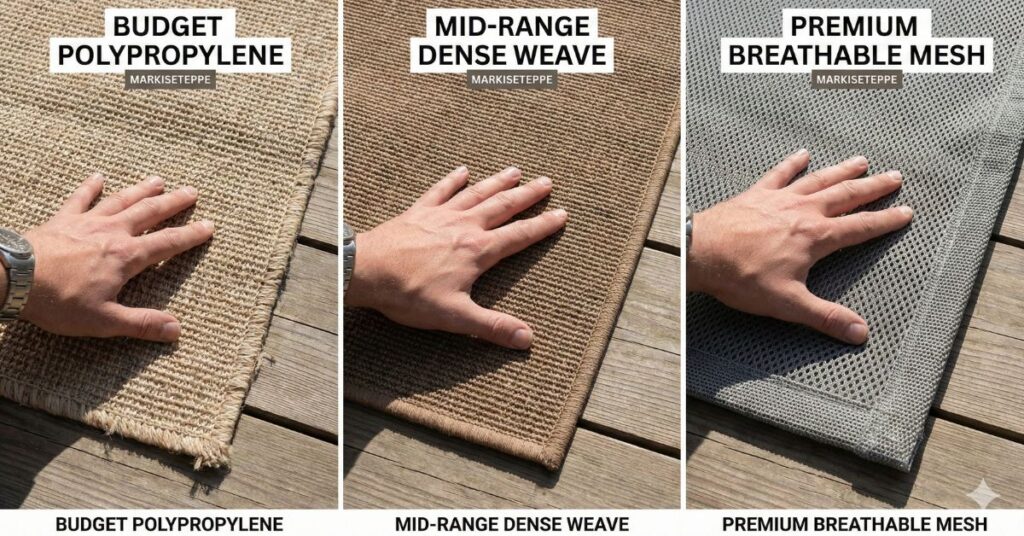
- You camp fewer than 20 days per year
- You mostly use concrete or gravel sites
- You’re testing whether you even like using a markiseteppe
- You camp in consistently dry climates
- You don’t mind replacing it every 1-2 seasons
Best option: Camco reversible mat. Stick with established brands and avoid no-name options.
- You camp 20-50 days per year
- You use a mix of site types
- You want quality without premium pricing
- You camp primarily in fair weather
- You’re willing to manage drying time after rain
Best option: Prest-O-Fit patio rug. Great balance of durability and value.
- You camp more than 50 days per year or full-time
- You encounter varied weather including regular rain
- You value time saved on setup and cleanup
- You want maximum durability and years of use
- You’re tired of dealing with moisture and mildew issues
Best option: Kampa Continental or equivalent breathable mesh carpet. Worth every penny for serious campers.
- Padded or foam-backed carpets unless you exclusively camp on concrete in dry climates
- Synthetic grass unless you never encounter pine needles, leaves, or organic debris
- No-name brands from unknown manufacturers—quality control is inconsistent
- Anything without proper edge reinforcement or grommets
Marketing materials focus on colors, patterns, and vague “premium quality” claims. Here’s what genuinely matters based on using these carpets in actual camping conditions:
The edges take the most abuse from staking, furniture movement, and rolling. Weak binding fails first. Look for double-stitched edges or heat-sealed binding. When examining a carpet in person, flex the edge aggressively—if it feels flimsy, it will fail quickly.
My budget carpet failed at the edges within weeks. My Kampa still has perfect edges after 18 months. This single feature determines whether a carpet lasts one season or five.
Many carpets claim breathability but drain slowly. Real breathable mesh drains water in seconds, not minutes. Pour water on a display model if possible—it should flow through immediately with minimal surface pooling.
Standard polypropylene carpets eventually drain but hold moisture initially. True mesh carpets drain instantly. This difference transforms rainy camping from frustrating to manageable.
Sun exposure destroys cheap materials faster than any other factor. UV-resistant polypropylene maintains color and integrity. Non-resistant versions fade to ugly gray within one season and become brittle.
Check specifications for UV stabilization or resistance. If not mentioned, assume it lacks proper protection. My faded budget carpet versus my still-vibrant premium carpet proves this matters enormously.
Proper grommets should be metal (not plastic), reinforced with backing material, and placed every 2-3 feet along edges. Cheap plastic loops tear out. Insufficient grommet placement means the carpet blows around in wind.
My best carpets have metal grommets with reinforcement rings. The cheap version had flimsy loops that pulled free. This seems minor until you’re chasing your carpet across the campground at 2 AM during a windstorm.
Heavier doesn’t mean better. My padded carpet was brutally heavy but less durable than lighter mesh options. Look for dense weave without unnecessary weight from padding or backing that traps moisture.
Ideal weight for a 9×12 carpet is 8-12 pounds dry. Under 8 pounds suggests cheap thin material. Over 15 pounds indicates padding or backing you don’t need. My Kampa at 10 pounds balances durability with manageable handling.
I’ve bought wrong sizes twice. Once too large for my storage, once too small for my actual setup. Here’s the sizing framework that actually works:
Extend your awning fully. Measure the width along the RV side. Measure depth from your door to where you’ll typically place chairs—usually 6-10 feet.
Critical rule: Buy carpet 6-12 inches smaller than your awning coverage. A 10-foot awning should use a 9-foot carpet. Why? Awnings never extend perfectly flat, and edges sticking out get soaked or sun-damaged. Keep the entire carpet under protection.
Before buying large, measure your storage compartments. My 9×12 carpet rolls to approximately 14 inches diameter and 10 feet long. It takes serious space.
Smart alternative: Buy two smaller carpets instead of one massive one. Use an 8×8 under the awning and a 6×6 for firepit area. Easier to handle, store compactly, and provide setup flexibility.
- 6×9 feet: Small campers, pop-ups, compact setups
- 8×12 feet: Mid-size travel trailers, most common size
- 9×12 feet: Large travel trailers, small motorhomes
- 9×18 to 10×20 feet: Large motorhomes, maximum coverage setups
Most people do well with 8×12 or 9×12. Unless you have a massive Class A motorhome, larger sizes create more hassle than benefit.
I’ve destroyed carpets through poor maintenance and extended others through smart care. Here’s what genuinely matters:
Shake it out daily. Pick up one end, give it 3-4 aggressive snaps. Dirt falls through. This takes 20 seconds and prevents 90% of deep cleaning needs.
For mud, wait until completely dry before attempting cleanup. Wet mud smears deeper into fibers. Dry mud brushes away easily.
Lay carpet flat on clean concrete. Mix mild dish soap and water. Scrub gently with soft brush. Rinse thoroughly—soap residue attracts dirt aggressively. Hang to dry completely.
Never use bleach. I ruined a carpet by bleaching a stain. It created a weak point that tore within weeks. Use Simple Green or similar gentle cleaner for stubborn stains.
Never roll up wet. This kills more carpets than any other mistake. Mold develops in 24-48 hours. I’ve seen carpets ruined this way repeatedly.
If you must pack wet (rainy departure), unroll at your destination immediately. Better yet, hang it over your ladder during travel if conditions allow.
Clean thoroughly, dry completely, roll loosely, store in breathable container. My garage works perfectly. Avoid airtight plastic bins that trap any residual moisture.
Testing seven markiseteppe over five years taught me that price and quality don’t always correlate. My $280 premium padded carpet was worse than my $95 mid-range option. The $165 breathable mesh outperforms everything else by a significant margin.
If you camp occasionally (under 20 days/year):
Buy the Camco reversible mat for $60-90. It’s budget-friendly and performs adequately for light use. Accept that you might replace it every few seasons, but the low cost makes that acceptable.
If you camp regularly (20-50 days/year):
Buy the Prest-O-Fit patio rug for $90-130. Best value proposition for regular campers. Durable enough for frequent use without premium pricing. Expect 3-5 years of service.
If you camp seriously (50+ days/year or full-time):
Buy the Kampa Continental or equivalent breathable mesh for $165-200. This is the markiseteppe to own. Weather performance, durability, and low maintenance justify the cost completely. You’ll likely never need to buy another one.
A quality markiseteppe transforms RV camping from dealing with dirt and mud to enjoying comfortable outdoor living space. But quality doesn’t always mean expensive. Match the carpet to your actual camping frequency and conditions rather than buying aspirationally.
The worst mistake is buying cheap garbage that fails immediately. The second-worst is overspending on features you don’t need. Find the right tier for your use case and buy quality within that tier.
I wasted $900 testing options so you can spend $70-180 once and get it right. Learn from my expensive education. Choose wisely, maintain properly, and your markiseteppe will serve you well for years of comfortable camping.
What’s your experience with awning carpets? Have you found options that work better than what I tested? The RV community thrives on shared knowledge—drop your insights below, especially if you’ve discovered solutions or products I haven’t covered.
Can I use a regular outdoor rug instead of a proper markiseteppe?
I tried this. Regular outdoor rugs are too heavy, don’t breathe properly, and trap moisture that kills grass underneath. The first time I used one on a grass site, the campground owner asked me to remove it because dead grass showed through after just three days. Spend the money on a real awning carpet—the difference is massive.
How long do markiseteppe actually last with real use?
Budget versions: 1-2 seasons or 30-50 nights. Mid-range: 3-5 years or 100-150 nights. Premium breathable mesh: 5-8 years or 200+ nights. My current Kampa is approaching 100 nights after 18 months and shows minimal wear. UV exposure is the biggest lifespan factor—sun degrades synthetic materials eventually regardless of quality.
What’s the biggest mistake people make when buying their first markiseteppe?
Buying too large without checking storage capacity. I’ve watched countless RVers buy massive carpets they can’t fit in their bays, resulting in the carpet staying home because it’s too annoying to deal with. Measure your storage before buying. A smaller carpet you actually use beats a larger one you leave behind.
Should I stake down my markiseteppe every time?
In calm conditions, furniture weight might suffice. In any wind, absolutely stake it. I’ve chased carpets across campgrounds at night enough times to always stake now. Use quality 10-inch steel stakes, not the cheap wire ones. Stake all four corners minimum, add sides every 3-4 feet in windy areas.
Can I leave my markiseteppe out during rain?
Breathable mesh carpets handle rain perfectly—water drains in seconds. Standard polypropylene gets wet but eventually drains and dries. Padded carpets are terrible in rain and take 12+ hours to dry. If forecasting heavy rain with standing water expected, I sometimes roll up standard carpets. Light rain is never a problem with quality materials.
Is the premium breathable mesh worth the extra cost?
For serious campers, absolutely yes. For casual weekend camping in dry climates, probably not. I camp 80+ days per year in varied conditions—the breathable mesh saves me hours of hassle and eliminates moisture concerns completely. If you camp 10 days per year on concrete pads, save your money. If you camp frequently or deal with rain, the premium is worth every penny.
What’s the one feature I should never compromise on?
Edge reinforcement. Weak edges kill carpets fast regardless of other quality factors. When examining carpets, flex the edges aggressively. If they feel flimsy or the binding looks thin, walk away. Strong edges determine whether a carpet lasts one season or five.
Should I buy reversible or single-sided?
Reversible adds value by extending usable life when one side shows wear. Most mid-range options offer this feature without significant cost increase. However, premium breathable mesh carpets are typically single-sided because the material construction doesn’t allow reversibility. For budget and mid-range, choose reversible. For premium mesh, single-sided is standard and not a concern.