
 By Callum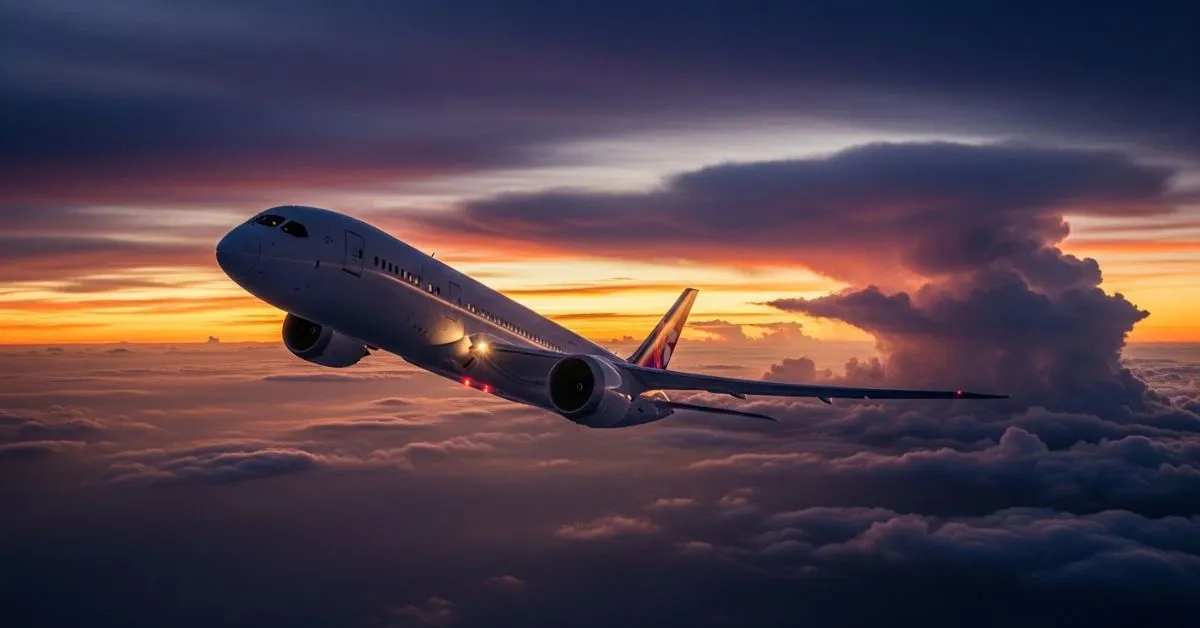
On July 22, 2025, United Airlines Flight UA770 was flying from Barcelona to Chicago when it declared a general emergency mid-flight and diverted to London Heathrow Airport. The aircraft, a Boeing 787-9 Dreamliner, was cruising at around 37,000 feet when the crew identified a cabin pressurization problem. The flight landed safely. No passengers or crew were injured. The incident was handled with professionalism, and the diversion was a textbook example of aviation safety working exactly as it should.
United Airlines Flight UA770 is a long-haul transatlantic service that connects Barcelona El Prat Airport (BCN) to Chicago O’Hare International Airport (ORD). It is a popular route for both business and leisure travelers crossing the Atlantic.
This specific flight was operated by a Boeing 787-9 Dreamliner, registered under tail number N26902. Known for its fuel efficiency, high-tech systems, and long-range capability, the Dreamliner is a favorite aircraft for international routes.
The flight carries a mix of tourists, business travelers, and frequent flyers. On the day of the incident, there were 257 passengers and 12 crew members on board. The journey from Barcelona to Chicago typically takes around nine to ten hours over the North Atlantic. By any measure, this should have been a routine flight.
It was not.
The flight departed Barcelona normally and climbed to its cruising altitude. For the first portion of the journey, everything ran as expected. Passengers settled in. Meals were served. The aircraft tracked its planned route westward over Europe and toward the Atlantic.
About 90 minutes into its flight, cruising at approximately 37,000 feet, the flight crew detected irregular readings in the aircraft’s cabin pressurization system, a critical system that keeps air pressure stable and safe at high altitude.
This was not a subtle warning. Pressurization alerts are taken seriously in aviation. At 37,000 feet, the outside air pressure is far too low for humans to breathe without assistance. The cabin pressurization system artificially maintains a safe internal pressure, roughly equivalent to being at 6,000 to 8,000 feet above sea level. When that system shows irregular behavior, pilots do not wait to see what happens next.
The pilots immediately began standard checks while maintaining communication with Air Traffic Control. As part of safety procedures, the aircraft started a controlled descent.
At the same time, the crew activated Squawk 7700 on the aircraft’s transponder. This is the universal emergency code that alerts air traffic controllers and nearby aircraft that a priority situation is unfolding. Within moments, the flight was given clear airspace and priority routing.
The pilots made the decision to divert to London Heathrow Airport, and there are very good reasons why that specific airport was chosen.
London’s Heathrow Airport was chosen for the emergency landing due to its status as one of Europe’s most prepared airports for long-haul flight emergencies. It has the necessary infrastructure, emergency response units, and medical support.
Think about it from a pilot’s perspective. You are flying a wide-body aircraft carrying over 250 people and you have a pressurization concern. You need an airport that can handle a Boeing 787-9, has full emergency services on standby, has United Airlines ground support, and is close enough to reach safely. Heathrow checks every single one of those boxes.
Emergency vehicles were already in position before the aircraft touched down, in case the situation worsened upon landing. The aircraft safely touched down at 4:55 PM BST on Runway 27R, a standard choice for heavy aircraft at Heathrow.
The landing was smooth. No drama. No injuries. Just a professional crew doing exactly what they were trained to do.
This is the question most people want answered. And the truth is: the picture is clearer than many headlines suggest, even if every technical detail has not been officially confirmed.
United Airlines confirmed that the aircraft diverted due to an in-flight technical issue and that all passengers and crew arrived safely. The airline grounded the affected aircraft for a thorough technical inspection. The airline also grounded the affected aircraft, tail number N26902, for a thorough technical inspection. No official cause has been publicly confirmed beyond the reference to a pressurization system alert.
That kind of careful, measured language is standard in aviation. Airlines and investigators take time to verify findings before making public statements. That is not evasion. That is responsible communication.
Based on the available evidence, the most likely cause of the United Airlines flight UA770 emergency diversion was an anomaly within the Environmental Control System (ECS), which governs cabin pressurization on commercial aircraft.
The main reason behind the diversion was a cabin pressurization issue. This system is critical in any commercial aircraft, including the Boeing 787-9, because it keeps the cabin environment safe for passengers at high altitude. At cruising levels, outside air pressure is extremely low. Without proper pressurization, passengers and crew cannot breathe normally.
Here is the important nuance. A pressurization alert does not necessarily mean the aircraft lost pressure. It can mean a sensor detected irregular readings, a valve behaved unexpectedly, or a redundancy system flagged a potential concern. Although the situation did not escalate to an actual loss of pressure or require oxygen masks, the pilots treated the alert as a potentially serious issue.
That is exactly the right call. In aviation, you do not wait for a problem to become catastrophic before reacting. You act on early warnings.
While cabin pressurization was the primary reported concern, a few other factors are always considered during any investigation of this kind.
A sensor fault is one possibility. Aircraft today are equipped with hundreds of sensors monitoring everything from cabin pressure and temperature to engine performance and hydraulic systems. Occasionally, a faulty sensor can trigger an alert that does not reflect an actual mechanical failure. However, pilots are trained to treat sensor alerts as real until proven otherwise.
A secondary mechanical concern, such as an issue with the bleed air system that feeds pressurization, is another possibility. On the Boeing 787-9, the pressurization architecture is different from older aircraft, using electric compressors rather than traditional engine bleed air. Any irregularity in those compressors would logically trigger a cabin pressure warning.
A medical emergency involving a passenger is also sometimes cited as a diversion cause, but in this case the pressurization system alert is the confirmed starting point.
None of these alternatives should be stated as facts at this stage. The investigation findings will be the authoritative record.
If you followed the UA770 incident on aviation tracking sites or social media, you probably saw the phrase “squawking 7700” mentioned frequently. The crew declared an emergency and diverted after squawking 7700. But what does that actually mean?
Every commercial aircraft carries a transponder, a device that continuously broadcasts the flight’s identity and altitude to Air Traffic Control radar systems. Pilots can set specific four-digit codes on this transponder to communicate different situations.
Squawk 7700 is the universal code for a general emergency. When a pilot dials in 7700, it immediately flags the aircraft on every radar screen in the region. Controllers clear the airspace around the flight, give it top priority, and coordinate with emergency services at the nearest suitable airport.
To put it in context, here is how the three key emergency squawk codes compare:
Squawk 7700 signals a general emergency, the situation we are discussing here.
Squawk 7600 indicates a communications failure, meaning the aircraft has lost radio contact with ATC.
Squawk 7500 is the most serious. It signals a hijacking or unlawful interference with the aircraft.
This might sound alarming, but squawking 7700 is actually a sign that the system is working. The pilot is communicating clearly and requesting the support they need. It is not a sign of chaos. It is a sign of a trained professional following procedure.
People sometimes assume that a diversion means something went catastrophically wrong. In reality, the opposite is often true. A diversion frequently means that the safety system caught a problem early enough to deal with it on the ground, where it is far easier to fix.
In many cases, diversions are precautionary. That means the issue may not become severe, but the crew still chooses to land as a safety measure. This approach is one of the reasons air travel remains one of the safest forms of transportation.
Commercial aviation operates under a principle called “safety first, schedule second.” Airlines, pilots, and regulators all understand that the cost of an emergency landing, which includes aircraft downtime, rebooking passengers, and maintenance crews, is trivial compared to the cost of allowing an in-flight problem to escalate.
The Federal Aviation Administration (FAA) and the International Air Transport Association (IATA) maintain strict guidelines that require pilots to act conservatively when system warnings appear. In practice, this means many diversions are for issues that turn out to be minor. But that is the point. You do not wait to find out whether an issue is minor.
When the pressurization alert appeared, the flight crew on UA770 went into a well-rehearsed response sequence. In reality, pilots are trained for this exact situation, and the procedure is practiced regularly in simulators.
The first step is recognition and verification. Pilots confirm the alert on multiple instruments and cross-check with co-pilot readings to rule out a single faulty instrument.
The second step is the Emergency Checklist. Every commercial aircraft has published emergency procedures for pressurization events. Pilots work through these checklists methodically, checking valves, systems, and redundancies.
The third step involves communication. The captain contacts Air Traffic Control, declares the emergency using Squawk 7700, and requests priority routing to the nearest suitable airport. At the same time, the cabin crew is briefed so they can prepare the cabin.
The fourth step is descent, if necessary. Passengers may have noticed changes in altitude or announcements from the cabin crew. A controlled descent to a lower altitude reduces the risk associated with any pressurization concern, since lower altitudes require less cabin pressurization.
Finally, the crew coordinates approach and landing at the diversion airport, in this case Heathrow, while continuing to monitor all aircraft systems.
For the 257 passengers on board, the experience was understandably unusual, even if it was never genuinely dangerous.
Despite the mid-air emergency, passengers remained calm, largely thanks to the composed and experienced crew. Cabin crew play a critical role in moments like this. Their training focuses not just on technical procedures but on managing passenger anxiety. Clear, calm announcements from the flight deck and confident behavior from attendants go a long way in keeping people settled.
Importantly, the situation did not escalate to an actual loss of pressure or require oxygen masks. That is a significant detail. Passengers did not experience any physical effects from the pressurization alert. The alert was detected and addressed before it could impact the cabin environment.
Some passengers likely noticed the change in flight path or altitude. A few may have picked up on the quiet, purposeful activity among the cabin crew. But there were no oxygen masks dropping from the overhead panels and no dramatic announcements. The professionalism of the crew meant the situation was contained without causing panic.
The Boeing 787-9 landed safely at Heathrow Airport without further complications. Airport emergency services remained on standby, which is standard for such situations, but no emergency medical response was needed. United Airlines confirmed that all passengers and crew were safe.
After the aircraft came to a stop, passengers were guided off the aircraft through normal disembarkation procedures. United Airlines ground staff at Heathrow coordinated rebooking and accommodation for affected travelers.
United Airlines acted quickly to support affected passengers, arranging onward travel to Chicago and other U.S. destinations. For a transatlantic diversion, the logistical effort involved in relocating over 250 people is considerable, but it is a process that major airlines have refined over many years.
After the aircraft landed, maintenance teams began inspecting the Boeing 787-9 Dreamliner. Engineers typically review the environmental control system, pressure sensors, and warning systems. They also examine the aircraft structure to ensure everything is functioning correctly.
The aircraft remained grounded at Heathrow until the inspection was complete, which is standard procedure following any emergency diversion.
The United Airlines flight UA770 emergency diversion attracted significant media coverage, partly because transatlantic diversions are relatively visible events. But in the broader context of commercial aviation, diversions happen regularly.
According to aviation safety data, there are approximately 40,000 commercial flights per day worldwide. Of these, a small but steady number divert due to technical alerts, medical emergencies, passenger incidents, or weather. Estimates suggest that diversions account for roughly one in every 10,000 to 20,000 flights, depending on the region and how “diversion” is defined.
Most diversions are precautionary, meaning the aircraft and its passengers were never in serious danger. The diversion itself is the safety mechanism doing its job.
Pressurization-related diversions are among the more common technical diversion types. Modern aircraft generate hundreds of system alerts across a typical long-haul flight. The vast majority are minor and resolved without any change to flight plan. When alerts involve critical life-safety systems like pressurization, however, pilots act immediately regardless of how severe the underlying issue appears.
Myth: A diversion means the flight was about to crash. Fact: The vast majority of diversions are precautionary. The UA770 diversion was handled calmly, and there was no structural danger to the aircraft.
Myth: Squawk 7700 means the aircraft is in immediate danger of going down. Fact: Squawk 7700 is a general emergency signal. It requests priority handling and alerts ATC to the situation. It does not indicate imminent catastrophe.
Myth: The Boeing 787-9 has known pressurization problems. Fact: The 787-9 is one of the most advanced and reliable commercial aircraft in service. This particular aircraft had passed all recent inspections, and maintenance records showed no red flags in the days leading up to the flight.
Myth: Airlines divert for minor issues to avoid liability. Fact: Diversions are expensive for airlines. They happen because safety protocols require it when certain alerts appear, not for reputational management.
Myth: Passengers were in danger the whole time. Fact: No injuries were reported, and there was no cabin decompression. The alert was detected early and addressed appropriately.
- The United Airlines flight UA770 emergency diversion occurred on July 22, 2025, when a Boeing 787-9 Dreamliner flying Barcelona to Chicago diverted to London Heathrow.
- The trigger was a cabin pressurization system alert detected approximately 90 minutes after departure.
- The crew declared a general emergency using Squawk 7700 and received priority clearance to land at Heathrow.
- All 257 passengers and 12 crew members were unharmed.
- The diversion was precautionary, not the result of structural failure or loss of cabin pressure.
- Heathrow was chosen for its emergency response infrastructure and proximity along the route.
- The aircraft was grounded for thorough inspection after landing, as required by protocol.
- The incident is a strong example of aviation safety systems working exactly as designed.
What caused the UA770 diversion?
The primary cause was an alert from the cabin pressurization system. The crew identified a cabin pressurization problem while cruising at around 37,000 feet and followed standard aviation procedures to divert. The exact technical cause was subject to a post-flight maintenance inspection.
What is Squawk 7700?
Squawk 7700 is the international transponder code for a general aviation emergency. When a pilot sets this code, it immediately alerts Air Traffic Control and nearby aircraft that the flight requires priority handling. It is a standard, controlled response to in-flight emergencies and does not automatically indicate a life-threatening situation.
Was the flight in danger?
The flight was not in immediate danger of crashing. The situation did not escalate to an actual loss of pressure or require oxygen masks. The diversion was a precautionary safety measure, and the aircraft landed without incident.
Why was London Heathrow chosen as the diversion airport?
Heathrow is one of the most prepared airports in Europe for emergency aircraft landings, especially for long-haul flights. It has the necessary infrastructure, emergency response units, and medical support to handle a wide-body aircraft diversion. Its location along the North Atlantic route also made it a logical choice.
Were passengers told what was happening?
Yes. The captain made announcements informing passengers of the situation. Flight attendants moved calmly through the cabin to reassure travelers. No panic was reported on board, which aviation professionals credit to clear communication from the crew.
What happened to the aircraft after landing?
Maintenance teams began inspecting the Boeing 787-9 Dreamliner after landing, reviewing the environmental control system, pressure sensors, and warning systems. The aircraft was grounded until the inspection was complete.
The United Airlines flight UA770 emergency diversion is, at its core, a story about aviation safety working the way it is supposed to. A sophisticated aircraft detected an anomaly. A trained crew recognized it, followed protocol, declared an emergency, and brought the plane safely to one of the best-equipped airports in the world. Everyone walked away without a scratch.
That outcome is not luck. It is the result of decades of safety culture built into every layer of commercial aviation, from the sensors in the aircraft to the training in the cockpit to the emergency teams waiting on the runway.
For anyone whose confidence in air travel was shaken by this story, the details should actually do the opposite. The system caught the problem early. The professionals handled it precisely. And 269 people went home safely.
That is what modern aviation safety looks like in practice.
 admin
admin