
 By admin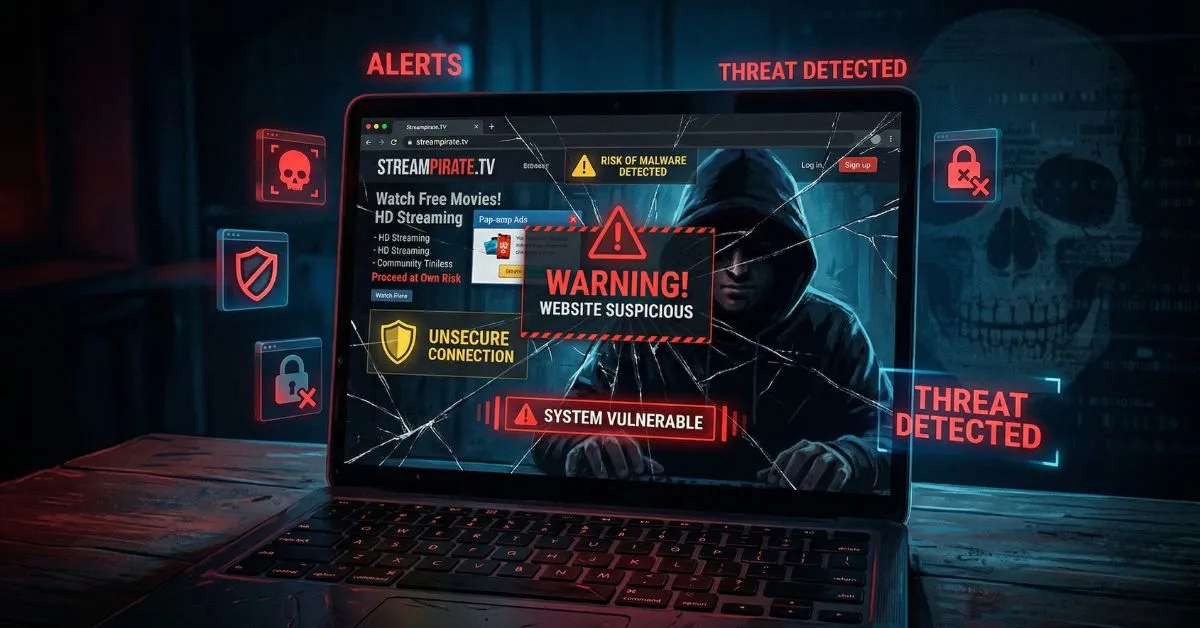
We’ve all been there. You want to watch a new movie, you don’t want to pay for yet another subscription, and then someone sends you a link. “Just use this site, it’s totally free.” Sounds great. Except it rarely is.
Sites like Facebim.com have popped up across the internet promising free, unlimited access to movies and TV shows. No sign-up, no credit card, just click and watch. Let’s be honest, that pitch is tempting. But behind that simple interface lies a stack of risks that most users don’t see until it’s too late.
This article breaks down exactly what these sites are, how they operate, and why using them can seriously backfire.
Sites like Facebim.com fall into a category commonly known as piracy streaming platforms. These are websites that host or link to copyrighted movies, TV shows, and other media without holding any legal license to distribute them.
Here’s the thing: the content on these sites isn’t “free” in any real sense. Someone still had to produce it. What these platforms do is redistribute copyrighted content without compensating the creators, studios, or distributors. That’s piracy, plain and simple.
These sites usually:
- Host thousands of films and shows across genres
- Require no account or payment to access
- Are often completely anonymous with no company name, no contact info, no accountability
- Change domain names frequently to avoid being shut down
- Generate revenue primarily through advertising, often of a highly dubious nature
The lack of accountability is itself a huge red flag. When there’s no company name on the site, no terms of service you can actually trust, and no one to contact if something goes wrong, you’re completely on your own.
Most people assume that just watching a pirated stream is legally safe. That’s not entirely true.
Copyright law in most countries distinguishes between hosting and streaming, but the lines are blurring. In several jurisdictions including the EU, the UK, and parts of Asia, streaming pirated content has been ruled as infringement even if the user isn’t hosting anything themselves.
In practice, most individuals don’t get prosecuted for casual streaming. But “most don’t” is not the same as “none do.” Rights holders have increasingly turned to ISP-level tracking, IP logging, and legal letters to deter users.
The bigger legal risk, though, is indirect. Using these sites can expose your device and personal data in ways that create serious downstream problems.
Let’s get into the real meat of the issue. Safety is where free piracy sites cause the most concrete, measurable harm to real users.
Piracy sites are one of the most common vectors for malware distribution on the internet. Studies from cybersecurity firms have consistently found that a significant percentage of free streaming and torrent sites serve malicious code to visitors. Sometimes this happens just from loading the page, without clicking anything at all.
Types of malware commonly encountered on these sites:
- Adware that hijacks your browser, redirects searches, and floods you with unwanted ads
- Ransomware that locks your files and demands payment to restore access
- Spyware that silently monitors your activity, keystrokes, and login credentials
- Trojans disguised as legitimate files like a “required codec update” that open backdoors into your system
- Cryptominers that use your CPU in the background to mine cryptocurrency for the site’s operators
You often don’t even need to click a fake download button. Many of these sites use drive-by download techniques where malware installs itself through browser vulnerabilities just from visiting the page.
The ad networks working with piracy sites are often the same ones rejected by legitimate platforms for violating content standards. That means you’ll routinely encounter:
- Fake “Your computer has a virus” pop-ups designed to trick you into downloading something harmful
- Ads that redirect your entire browser to scam pages without warning
- Auto-play audio and video ads that are extremely difficult to close
- Fake streaming players that are actually elaborate ad traps
- Adult content ads served without any warning, which is a genuine problem if children are nearby
Even if you have an adblocker installed, these sites frequently find workarounds. Some even block the video player entirely until you disable your adblocker.
Many of these platforms collect extensive data on visitors even without any sign-up process. Your IP address, browser fingerprint, location data, and browsing habits can all be logged and sold to third parties.
If you do create an account, which some of these sites encourage to unlock “better” streams, your email and password are at serious risk. These platforms have zero incentive to secure user data, and many have been found to sell or leak credentials almost immediately after collection.
Some versions of these sites are set up specifically as phishing traps. They mimic legitimate streaming services, encourage you to “log in with Google” or “verify your account,” and then capture your credentials in the process.
If you’ve ever typed your Google, Facebook, or Netflix password into one of these sites thinking it was a login form, that password should be changed immediately.
If you’ve tried searching for a site like this and found multiple versions, Facebim1, Facebim2, or completely different domain extensions like .club, .to, or .xyz, that’s not an accident.
Domain hopping is a deliberate evasion tactic. When ISPs block a domain or a legal takedown removes a site, the operators simply register a new domain and redirect traffic. The site’s reputation doesn’t come with it. Users who follow a new link have no way of knowing whether they’re on a legitimate mirror or a copycat site set up entirely to harvest data.
This is a meaningful risk. Even if you’ve used a site before without obvious incident, a new domain claiming to be the same site might be run by entirely different and potentially far more malicious operators.
Users frequently search for solutions to problems like:
- “Why is Facebim not loading?”
- “Buffering issues on free streaming sites”
- “Why does the video not play?”
Here’s the uncomfortable truth: these sites are unreliable by design. They have no infrastructure obligations, no uptime guarantees, and no customer support. When they go down, they go down. When they slow to a crawl, there’s nothing you can do about it.
Suggested fixes floating around online, like using a VPN, clearing cache, or trying a different browser, might occasionally work. But they don’t address the underlying instability. And a VPN, while useful for privacy, does absolutely nothing to protect you from malware served directly from a webpage you’re actively visiting.
It’s worth stepping back from the personal risks for a moment and acknowledging the wider damage.
The entertainment industry isn’t just faceless corporations. Piracy directly affects below-the-line workers including camera operators, editors, set designers, and sound engineers who depend on residuals and distribution revenues. It affects independent filmmakers who can’t absorb financial losses the way large studios can. It affects streaming platforms already under intense pressure to justify subscription costs.
When millions of viewers shift to piracy sites, it doesn’t just eat into studio profits. It affects the viability of mid-budget and independent content that would otherwise never get made in the first place.
Let’s be fair about it.
| Perceived Benefit | Reality Check |
| Free access to content | Costs you in malware risk, data exposure, and potential device damage |
| No subscription needed | Ad interruptions are often far worse than a monthly fee |
| Wide content library | Library is unstable, often broken, and inconsistent in quality |
| Anonymous access | Your IP is still visible and the site itself may log extensive data |
- High risk of malware infection from just visiting the page
- No legal protection if something goes wrong
- Unstable and unreliable viewing experience
- Dangerous advertising ecosystem with no content standards
- Potential exposure to phishing and credential theft
- Device performance problems from hidden cryptomining scripts
- Data harvesting with zero accountability or recourse
- Contributes to financial harm to content creators and workers
Here’s the good news: you genuinely don’t need piracy sites. There’s a solid ecosystem of free, legal streaming options that most people don’t fully know about.
| Platform | What’s Free | Quality | Safe? |
| Tubi | Movies and TV (ad-supported) | HD | Yes, owned by Fox |
| Pluto TV | Live channels and VOD | Good | Yes, owned by Paramount |
| YouTube Movies | Free rental section | HD and 4K | Yes, Google-backed |
| Peacock Free Tier | Limited NBC and Universal content | HD | Yes |
| Crackle | Movies and originals | HD | Yes, Sony Pictures |
| Kanopy | Art house and classics via library card | HD | Yes, library-funded |
| Plex | Movies and TV (ad-supported) | HD | Yes |
| Amazon Freevee | Rotating catalog | HD | Yes, Amazon-backed |
Most of these require nothing more than a free account. Some like Kanopy and Plex don’t even require that. The experience is slower than Netflix, sure, but the content is legitimate, the ads are normal, and your device isn’t being quietly mined for cryptocurrency while you watch.
The landscape of online piracy has shifted meaningfully in the past year. A few developments worth knowing about:
Stricter enforcement: Multiple governments, particularly in the EU, UK, India, and Southeast Asia, have implemented real-time domain blocking for piracy sites. ISPs are now required to block thousands of domains dynamically. The game of whack-a-mole is accelerating fast.
AI-powered ad fraud: Security researchers have documented a new wave of piracy sites using AI-generated content to appear more legitimate while still serving dangerous ad networks. The fakes are getting genuinely harder to spot.
Increased malware sophistication: 2025 and 2026 saw a sharp rise in cryptomining scripts embedded in streaming pages, specifically ones that throttle down their CPU usage to avoid triggering detection while still generating revenue for operators.
Legal streaming has improved significantly: Free tier offerings from legitimate platforms have expanded considerably. Tubi, Pluto TV, and Freevee have all grown their catalogs. The gap between free piracy and free legitimate streaming is narrowing fast.
Is it actually illegal to watch a movie on a site like Facebim?
It depends on your country. In many jurisdictions, streaming as opposed to downloading sits in a legal grey area for end users. However, accessing these sites is never truly safe regardless of the legal question, because of the malware and phishing exposure involved.
Can a VPN protect me on piracy streaming sites?
A VPN hides your IP address from the site and your ISP, but it does not protect you from malware, phishing pages, or dangerous ads served by the site itself. It’s a partial measure at best and shouldn’t be mistaken for real protection.
What if I already visited one of these sites? Should I be worried?
Run a reputable antivirus scan immediately. Check your browser extensions for anything unfamiliar. If you entered any login credentials on or after visiting, change those passwords right away.
Why do these sites have so many pop-ups?
That’s the business model. Pop-up ads, particularly those mimicking system alerts, are among the highest-paying ad formats these sites can access. Some earn thousands of dollars a day just from ad clicks, even with a fraction of legitimate traffic compared to real platforms.
Are mirror sites of Facebim safe?
No. Mirror sites are often more dangerous than the original because they may be run by unrelated operators who have copied the branding specifically to exploit the incoming traffic. There’s no way to verify who is actually running a mirror.
What’s the best free streaming option right now?
Tubi and Pluto TV are the most consistently recommended free, legal options heading into 2026. Both have large libraries, work well on mobile and smart TVs, and don’t require a credit card to get started.
The appeal of sites like Facebim is understandable. Nobody wants to pay for four different streaming subscriptions just to watch the things they care about. That frustration is completely legitimate.
But the hidden cost of free piracy streaming is real and, for many users, significant. Malware infections, data theft, cryptomining scripts quietly degrading your device, aggressive phishing ads, these aren’t hypothetical risks. They’re documented, common outcomes that affect real people every day.
The good news is that you genuinely don’t have to choose between paying and piracy anymore. The legal free streaming ecosystem has grown enough that most casual viewers can find what they need without ever touching a piracy site.
Watch smart. Stay safe.
 Callum