
 By admin
When summer arrives and you’re enjoying a bowl of fresh strawberries, you’ve probably noticed your dog’s hopeful eyes watching every bite. The question naturally arises: can dogs eat strawberries safely? The short answer is yes, and there’s actually more good news than you might expect.
Strawberries aren’t just safe for dogs—they offer genuine health benefits when fed properly. However, like most good things, moderation matters. Understanding how many strawberries your dog can eat, how to prepare them correctly, and which situations require caution will help you share this delicious fruit with your four-legged friend safely.
Yes, strawberries are completely safe for dogs to eat. Unlike grapes, raisins, or certain other fruits that are toxic to canines, strawberries pose no inherent danger. Dogs are omnivores, which means their digestive systems can process both meat and plant-based foods, including fruits like strawberries.
The American Kennel Club and veterinary nutritionists agree that strawberries make an excellent occasional treat. They’re non-toxic, naturally sweet, and packed with beneficial nutrients. Both puppies and adult dogs can enjoy them without worry, provided you follow basic feeding guidelines.
However, safe doesn’t mean unlimited. Strawberries contain natural sugars that can contribute to weight gain and dental issues if fed excessively. They should be treated as exactly what they are—a treat, not a meal replacement or regular dietary staple.
Strawberries pack a surprising nutritional punch that can genuinely benefit your dog’s health. Here’s what makes this fruit particularly valuable:
Strawberries are loaded with vitamin C, which supports your dog’s immune system. While dogs naturally produce vitamin C in their livers (unlike humans), additional dietary vitamin C can help during times of stress, illness, or physical exertion. Active dogs, working breeds, and senior dogs may particularly benefit from this extra immune support.
The bright red colour of strawberries comes from anthocyanins and other antioxidants that help combat free radicals in your dog’s body. These compounds support cellular health and may help reduce inflammation. Research suggests antioxidants play a role in slowing age-related cognitive decline in senior dogs.
One medium strawberry contains approximately half a gram of dietary fibre. This helps promote healthy digestion and regular bowel movements. Dogs who occasionally experience constipation may find relief from the gentle fibre boost strawberries provide.
Strawberries contain manganese, a trace mineral that helps your dog’s body convert proteins and carbohydrates from their regular food into usable energy. This mineral also supports bone development and wound healing.
Perhaps surprisingly, strawberries contain malic acid, a natural enzyme that can help whiten your dog’s teeth. While they won’t replace proper dental care, strawberries can contribute to better oral hygiene when fed regularly as part of a balanced diet.
The potassium in strawberries supports proper nerve transmission and muscle function. This is particularly beneficial for active dogs who need optimal muscle performance and recovery.
For dogs watching their weight, strawberries offer a satisfying treat at only 4-5 calories per berry. Compare this to many commercial dog treats that contain 25-40 calories each, and you’ll see why strawberries make an excellent choice for training rewards or between-meal snacks.
The golden rule for any dog treat is the 10% rule: treats should never exceed 10% of your dog’s daily caloric intake. For strawberries, this translates to different amounts depending on your dog’s size.

Small breeds like Chihuahuas, Yorkshire Terriers, or Pomeranians should receive no more than one to two strawberries per day. Their smaller bodies and lower caloric needs mean even a few berries can represent a significant portion of their daily treat allowance.
Breeds like Beagles, Cocker Spaniels, or Border Collies can safely enjoy three to four strawberries daily. This provides the nutritional benefits without overloading them with sugar or fibre.
Labrador Retrievers, German Shepherds, and similar sized dogs can handle five to six strawberries per day. Even though they’re bigger, resist the temptation to feed more—the sugar content remains a concern regardless of size.
Giant breeds like Great Danes, Mastiffs, or Saint Bernards can eat up to seven or eight strawberries daily. However, spreading this amount throughout the day rather than feeding all at once helps prevent digestive upset.
Remember, these are maximum amounts for occasional feeding. Most days, your dog should receive fewer strawberries or none at all. Variety in treats helps ensure balanced nutrition and prevents your dog from developing an overreliance on any single food.
Puppies can absolutely eat strawberries, and many puppies love them. However, young dogs require extra consideration when introducing any new food.
Start with small amounts—just a quarter of one strawberry for the first feeding. Watch your puppy for 24 hours for any signs of digestive upset, including loose stools, vomiting, or changes in appetite. If everything looks normal, you can gradually increase the portion size over several weeks.
Always cut strawberries into small, bite-sized pieces for puppies. Their smaller throats and tendency to gulp food without chewing properly make choking a real concern. Quarter or even dice strawberries for toy breed puppies.
Mashing strawberries works particularly well for very young puppies just transitioning to solid food. Mix a small amount of mashed strawberry with their regular puppy food to add flavour and encourage eating.
Keep in mind that puppies need the vast majority of their nutrition from a complete and balanced puppy food formulated for growth. Treats, including strawberries, should make up no more than 5-10% of a puppy’s daily calories to ensure proper development.
Proper preparation ensures your dog gets maximum nutrition while minimizing any potential risks. Follow these steps every time:
Always wash strawberries thoroughly under cool running water before feeding them to your dog. Conventionally grown strawberries often carry pesticide residues on their surface. Even organic strawberries may harbour dirt, bacteria, or other contaminants from handling and transport.
Gently rub each berry under water for 10-15 seconds. You can also use a vegetable brush with soft bristles. Some pet owners soak strawberries in a vinegar solution (one part white vinegar to three parts water) for five minutes before rinsing—this removes more surface contaminants than water alone.
While strawberry leaves aren’t toxic to dogs, they offer little nutritional value and can be difficult to digest. The fibrous texture may cause mild stomach upset in some dogs. Simply twist off the green leafy top and the attached white core before feeding.
The size you cut strawberries depends on your dog’s breed and eating habits:
- Small dogs: Quarter each strawberry lengthwise
- Medium dogs: Cut into halves
- Large dogs: Halves or whole berries work fine
- Dogs who gulp food: Always quarter regardless of size
Different preparation methods suit different situations:
Whole strawberries work well for large dogs who chew their food properly. They provide the most satisfying eating experience and require minimal preparation.
Sliced strawberries are ideal for mixing into your dog’s regular food or using as training treats. They’re easy to portion and distribute evenly.
Mashed strawberries excel for puppies, senior dogs with dental issues, or mixing with other foods. Mash with a fork until smooth, leaving no large chunks.
Frozen strawberries make excellent summer treats. Freeze whole berries or cut pieces for a refreshing snack on hot days. Some dogs prefer the cold, crunchy texture, though dogs with sensitive teeth may find frozen fruit uncomfortable.
Both fresh and frozen strawberries are safe for dogs, each with distinct advantages.
Fresh berries offer peak flavour and the softest texture. They’re easiest for dogs to chew and digest. When strawberries are in season (typically May through September in the Northern Hemisphere), fresh berries often cost less and taste better than frozen options.
However, fresh strawberries spoil quickly. They typically last only 5-7 days in the refrigerator. Check them daily for signs of mold or soft spots, and discard any that look questionable.
Frozen strawberries provide year-round availability and longer storage life. They’re often picked at peak ripeness and frozen immediately, which can preserve nutritional value better than fresh berries that spent days in transport and storage.
For dogs, frozen strawberries serve double duty as both a treat and a cooling aid during hot weather. The cold temperature can soothe teething pain in puppies when given in moderation.
If using commercially frozen strawberries, check the ingredients list. Buy plain frozen strawberries with no added sugar, sweeteners, or preservatives. Some frozen berry products contain added citric acid or sugar, which your dog doesn’t need.
Let frozen strawberries thaw for 5-10 minutes before feeding to dogs with sensitive teeth or dental problems. This prevents discomfort while still providing a refreshingly cool treat.
While strawberries are generally safe, certain situations warrant caution or complete avoidance.
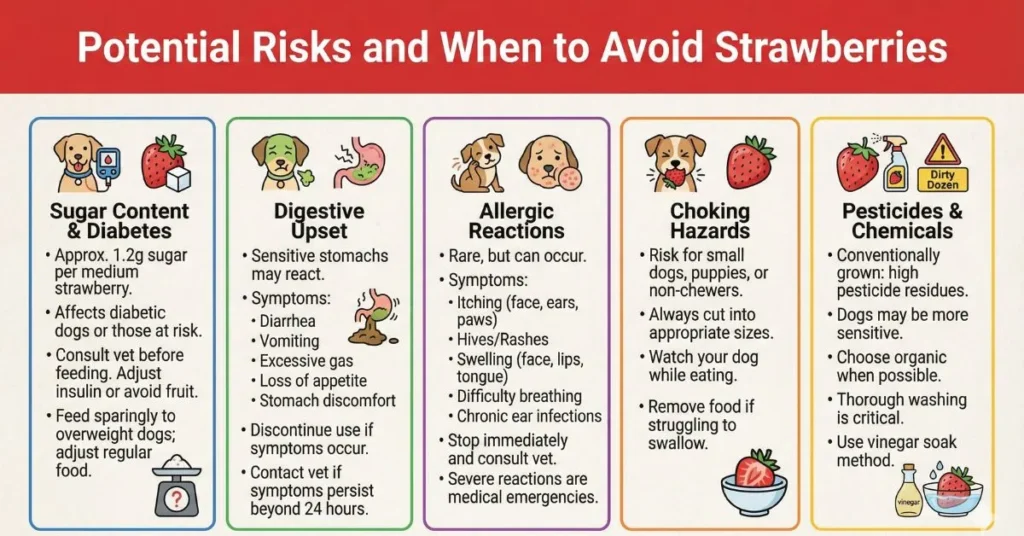
The natural sugar in strawberries can affect dogs with diabetes or those at risk for developing the condition. One medium strawberry contains approximately 1.2 grams of sugar. While this seems minimal, it adds up quickly.
If your dog has been diagnosed with diabetes, consult your veterinarian before adding strawberries or any fruit to their diet. You may need to adjust insulin dosages to account for the extra sugar, or your vet may recommend avoiding fruit treats entirely.
Overweight dogs should receive strawberries sparingly. Even though they’re low in calories, the sugar can slow weight loss efforts. Consider reducing the amount of regular food by a small amount to compensate for strawberry calories.
Some dogs have sensitive stomachs that react poorly to new foods. Signs of digestive upset include:
- Diarrhea or loose stools
- Vomiting
- Excessive gas
- Loss of appetite
- Stomach gurgling or discomfort
If you notice any of these symptoms after feeding strawberries, discontinue them and stick to your dog’s regular diet. Most digestive issues resolve within 24 hours. If symptoms persist beyond this, contact your veterinarian.
True allergies to strawberries are rare in dogs but do occur. Symptoms of an allergic reaction may include:
- Itching or scratching, especially around the face, ears, or paws
- Hives or skin rashes
- Swelling of the face, lips, or tongue
- Difficulty breathing
- Chronic ear infections
If you observe any of these signs after introducing strawberries, stop feeding them immediately and consult your vet. Severe reactions, though extremely uncommon, constitute medical emergencies requiring immediate veterinary attention.
Whole strawberries pose a choking risk, particularly for small dogs, puppies, or dogs who don’t chew their food properly. Always cut strawberries into appropriate sizes for your dog’s breed and eating habits.
Watch your dog while they eat strawberries, especially the first few times. If they seem to struggle with swallowing or show signs of distress, remove the food immediately.
Conventionally grown strawberries consistently rank among the “Dirty Dozen” fruits and vegetables with the highest pesticide residues. While the amounts are considered safe for human consumption, dogs weigh less and may be more sensitive to these chemicals.
Choose organic strawberries when possible, especially if feeding them regularly. If organic isn’t an option or affordable, thorough washing becomes even more critical. The vinegar soak method mentioned earlier removes more pesticides than water alone.
Strawberries aren’t the only fruit your dog can enjoy. Understanding how they compare to other options helps you provide variety.
Blueberries contain less sugar per berry and are smaller, making them excellent training treats. They’re also packed with antioxidants. However, strawberries provide more vitamin C and manganese. Both are excellent choices, and alternating between them provides nutritional variety.
Bananas offer more potassium and a creamier texture dogs often love. However, they’re significantly higher in calories and sugar. One medium banana contains about 105 calories compared to 32 calories for eight medium strawberries. For weight-conscious dogs, strawberries are the better option.
Apples provide excellent crunch and fiber but require more preparation. You must remove the core and seeds, which contain small amounts of cyanide compounds. Strawberries need only quick washing and stem removal, making them more convenient.
Oranges deliver vitamin C but are more acidic, which can upset sensitive stomachs. Strawberries provide similar vitamin C benefits with less acidity risk. Additionally, oranges require peeling and careful segment separation, while strawberries are simpler to prepare.
Watermelon offers superior hydration with its 92% water content. It’s perfect for hot summer days. However, watermelon requires removing all seeds and rind, and the high water content can cause more frequent urination. Strawberries are less messy and easier to portion.
Beyond simply handing your dog a strawberry, try these engaging methods:
Blend strawberries with plain, unsweetened yogurt (check it’s xylitol-free). Pour the mixture into ice cube trays and freeze. These frozen treats provide cooling relief on hot days while delivering probiotics from the yogurt alongside strawberry nutrients.
Cut strawberries into tiny pieces (about the size of a pea) for training sessions. The natural sweetness makes them highly motivating rewards. Unlike many commercial treats, strawberries won’t spoil quickly during extended training sessions, especially on cooler days.
Mash strawberries and mix with a small amount of peanut butter (ensure it’s xylitol-free). Stuff this mixture into a Kong toy and freeze. This creates an engaging activity that keeps dogs entertained while they work to extract the treat.
Combine diced strawberries with other dog-safe fruits like blueberries, apple chunks (no seeds or core), and banana slices. This fruit salad provides nutritional variety and different textures your dog will find interesting.
Thread strawberry slices onto dog-safe sticks or place them in ice pop molds with water. Freeze overnight. These homemade popsicles provide refreshing entertainment during summer heat waves.
Add a few diced strawberries on top of your dog’s regular kibble or wet food. This adds nutritional value and makes mealtime more exciting. It’s particularly helpful for picky eaters who need extra incentive to finish their food.
Different parts of the strawberry raise different questions about safety.
The tiny seeds covering strawberry surfaces are completely safe. They’re too small to cause choking or digestive issues. Dogs can eat strawberries with all the seeds intact without any concern.
The short green stems connecting the leafy top to the fruit are safe but offer no nutritional benefit. Some dogs chew and swallow them without issue. Others may find them unpalatable or difficult to digest. Removing stems is generally recommended, though not strictly necessary for safety.
The green leafy tops of strawberries aren’t toxic to dogs but can be hard to digest. The fibrous texture may pass through your dog’s digestive system largely intact. While they won’t poison your dog, they can potentially cause mild stomach upset in sensitive individuals.
For convenience and digestive ease, simply twist off the entire green top before feeding strawberries to your dog. This takes only seconds and eliminates any potential issues.
Not every dog enjoys strawberries, and that’s perfectly normal. Watch for these reactions:

- Eager interest when you hold out a strawberry
- Quick consumption without hesitation
- Licking lips or searching for more
- Excited behaviour when they see you preparing strawberries
- Willingness to perform commands for strawberry rewards
- Sniffing the strawberry but refusing to eat it
- Taking it in their mouth then spitting it out
- Walking away or showing disinterest
- Eating reluctantly only when no other options exist
- Burying it or trying to save it for later (suggesting they don’t really want it)
Never force your dog to eat strawberries if they show clear dislike. Plenty of other healthy treat options exist. Some dogs simply don’t enjoy fruit, preferring meat-based treats or vegetables instead.
Can diabetic dogs eat strawberries?
Diabetic dogs should only eat strawberries under veterinary supervision. The natural sugars can affect blood glucose levels. Your vet can advise whether strawberries fit into your diabetic dog’s diet plan and how to properly adjust insulin if needed.
How do I know if my dog is allergic to strawberries?
Allergic reactions typically manifest as itching, skin rashes, hives, swelling, or digestive upset. These symptoms usually appear within a few hours of eating strawberries. If you suspect an allergy, stop feeding strawberries and consult your veterinarian.
Can I feed my dog strawberry jam or yogurt?
No. Commercial strawberry products contain added sugars, artificial sweeteners (potentially including toxic xylitol), and preservatives that aren’t safe for dogs. Stick to fresh or plain frozen strawberries only.
Are wild strawberries safe for dogs?
Wild strawberries (Fragaria vesca) are safe if you’re absolutely certain of the identification. However, several similar-looking plants can cause toxicity. Unless you’re an expert forager, stick to strawberries purchased from grocery stores.
Can strawberries cause red poop in dogs?
Yes, eating multiple strawberries can temporarily tint your dog’s stool reddish. This is harmless and comes from the natural pigments in the fruit. The colour should normalize within 24-48 hours.
Should I buy organic strawberries for my dog?
Organic strawberries eliminate pesticide exposure concerns. If you feed strawberries regularly (several times per week), organic options are worth the extra cost. For occasional treats (once weekly or less), thoroughly washed conventional strawberries are generally fine.
Can elderly dogs with dental problems eat strawberries?
Yes. Mash strawberries into a soft puree that requires no chewing. This allows senior dogs with missing teeth, gum disease, or dental pain to enjoy strawberry benefits without discomfort.
Do strawberries really help with bad breath in dogs?
Strawberries contain malic acid, which has mild teeth-whitening and breath-freshening properties. However, they’re not a substitute for proper dental care including tooth brushing and professional cleanings. Think of strawberries as a helpful addition, not a solution.
Can I feed strawberry tops to my dog?
While not toxic, strawberry tops offer minimal nutrition and can be hard to digest. They may cause mild stomach upset. It’s better to simply remove and compost them rather than feed them to your dog.
What should I do if my dog eats a whole container of strawberries?
Monitor them closely for signs of digestive upset including vomiting, diarrhea, or abdominal pain. The large amount of fiber and sugar will likely cause loose stools. Ensure fresh water is available. If symptoms are severe or persist beyond 24 hours, contact your vet.
When used wisely, strawberries become another tool in your arsenal of healthy, enjoyable treats that strengthen the bond between you and your canine companion. They transform from simple fruit into shared moments of joy—and that’s something worth celebrating, one berry at a time.
 Callum